Modern smart homes rely on sensitive electronics — routers, automation hubs, smart TVs, cameras and connected appliances that stay powered all day. While automation makes life easier, it also increases exposure to voltage spikes, power fluctuations and unexpected outages.
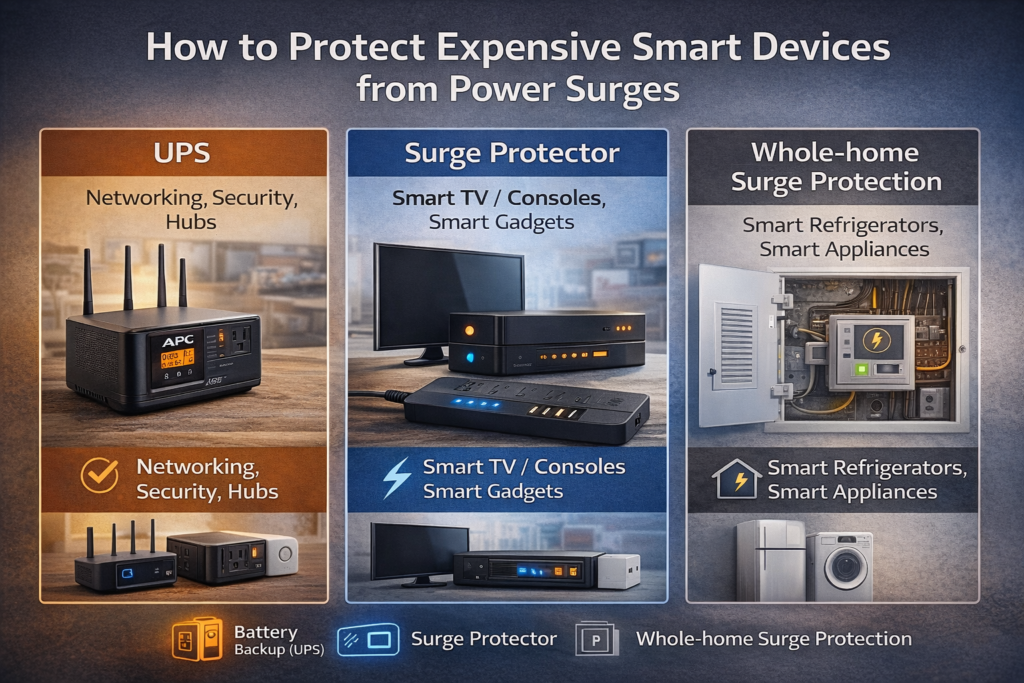
Protecting smart devices isn’t about using one single solution. Different devices require different layers of protection depending on how they interact with your home’s electrical system.
Understanding what type of protection each device needs is the key to building a reliable and resilient smart home.
⚡ Why Smart Devices Need Specialized Power Protection
Unlike traditional appliances, smart devices use advanced processors and compact power supplies that react quickly to unstable voltage.
Common risks include:
- Lightning-related surges
- Utility switching events
- Short power interruptions
- Daily micro-fluctuations in voltage
Even small disturbances can slowly reduce performance or shorten device lifespan. That’s why power protection should be planned as part of the smart home design — not added later.
📡 Networking and Automation Devices — UPS + Surge Protection
The foundation of any smart home is connectivity. Routers, mesh systems and automation hubs control how devices communicate and respond to routines.
Devices in this category include:
- Routers and mesh Wi-Fi nodes
- Smart home hubs
- NAS storage systems
- PoE switches and camera recorders
Recommended protection
- UPS for battery backup and voltage regulation
- Surge protection to block high-energy spikes
These devices consume low power but are critical to automation. A UPS keeps them running during short outages, preventing the entire ecosystem from restarting.
Daily interaction example:
A brief power flicker occurs. Instead of losing connection, the UPS maintains power and your automations continue working normally.
📺 Smart TVs, Consoles and Media Centers — Surge Protection with Optional UPS
Entertainment systems are often some of the most expensive electronics in a smart home. Their protection focuses on preventing hardware damage and maintaining stability.
Typical devices:
- Smart TVs
- Streaming boxes
- Gaming consoles
- Audio receivers
Recommended protection
- High-quality surge protector as the main defense
- Optional UPS for users who want controlled shutdown during outages
Surge protection helps absorb voltage spikes, while a UPS adds an extra layer of stability for advanced setups like home servers or media storage.
🔒 Security Cameras, Smart Locks and Monitoring Systems — UPS + Surge Protection
Security devices play a unique role because they need to remain operational even when power conditions change.
Examples include:
- Wired security cameras
- Network video recorders
- Smart alarm hubs
- Smart locks connected to central hubs
Recommended protection
- UPS to maintain continuous operation
- Surge protection to safeguard sensitive electronics
With layered protection, monitoring systems remain active during storms or power interruptions — increasing both safety and reliability.
🧊 Connected Appliances and Smart Home Equipment — Dedicated Surge Protection
Modern smart appliances and connected home equipment include embedded electronics that benefit from stable power conditions.
Examples:
- Smart refrigerators
- Connected laundry systems
- Smart HVAC controllers
- Integrated kitchen devices
Recommended protection
- Whole-home surge protection at the electrical panel
- Appliance-level surge devices when available
This approach protects internal control boards and sensors from voltage spikes while maintaining long-term reliability.
💡 Smart Lighting, Speakers and Everyday Gadgets — Surge Protection for Stability
Low-power devices are often spread throughout the house and operate continuously.
Common examples:
- Smart bulbs and LED strips
- Voice assistants
- Smart plugs
- Charging stations
Recommended protection
- Quality surge protector to maintain stable voltage
These devices typically reconnect automatically after power restoration, so the main goal is protecting their internal components from sudden spikes.
⚙️ How Layered Protection Works in a Real Smart Home
Instead of relying on one device to protect everything, modern smart homes use multiple layers:
Layer 1 — Whole-home surge protection
Reduces large voltage spikes entering the house.
Layer 2 — UPS for critical electronics
Maintains connectivity and automation.
Layer 3 — Surge strips for distributed gadgets
Protects entertainment and lighting devices.
This layered structure mirrors how professional IT systems are designed — and smart homes now function with similar complexity.
🏡 A Day Inside a Properly Protected Smart Home
Morning:
- Router and hub powered through a UPS
- Lights and speakers connected through surge protection
Afternoon:
- Voltage fluctuation occurs
- Surge protector absorbs excess energy
- UPS keeps network stable
Night:
- Short outage happens
- Cameras and automation systems continue running
- Smart home routines stay active
Protection becomes invisible — but essential.
⚖️ Quick Guide — Which Protection Each Device Needs
| Device Type | Recommended Protection |
|---|---|
| Router / Smart Hub | UPS + Surge |
| Smart TV / Console | Surge Protector |
| Security Cameras | UPS + Surge |
| Connected Appliances | Whole-home Surge Protection |
| Smart Lighting | Surge Protector |
❓ Common Questions
Do all smart devices need battery backup?
Not always. UPS systems are most useful for networking and security equipment.
Is surge protection still necessary with a UPS?
Yes. Surge protection handles high-energy spikes while UPS stabilizes voltage.
What is the safest approach for beginners?
Start by protecting networking equipment with a UPS and expand protection to other devices with surge protection.
Can layered protection improve device lifespan?
Stable power reduces stress on internal components, helping devices last longer.
Is power protection important even without storms?
Yes — daily voltage fluctuations can affect electronics over time.
✅ Final Thoughts
Protecting a smart home isn’t about one single device — it’s about matching the right type of protection to each category of equipment.
UPS systems maintain stability where connectivity matters most.
Surge protection shields electronics from unexpected voltage spikes.
Whole-home solutions provide an extra layer of defense for connected appliances.
When these layers work together, smart devices don’t just perform better — they last longer and operate more reliably.