The Complete Guide to Protecting Sensitive Electronics from Voltage Transients
Modern smart homes rely on advanced electronics to deliver comfort, security, and connectivity. From smart TVs and home automation hubs to Wi-Fi systems, solar inverters, and EV chargers, today’s homes are filled with sensitive electronic equipment.
However, one hidden threat puts all these systems at risk: voltage transients.
This guide explains how smart home surge protection works, why voltage spikes damage electronics, and how a layered whole-house surge protection strategy provides the highest level of defense.
What Is a Voltage Transient?
A voltage transient (also called a power surge or spike) is a sudden increase in voltage that lasts only microseconds but carries enough energy to damage electronic components.
Unlike blackouts, transients often go unnoticed — yet they are one of the leading causes of electronic failure in smart homes.
Common Causes of Voltage Transients
- Nearby lightning strikes
- Utility grid switching
- HVAC systems and large motors
- Solar power systems and battery backups
- EV chargers and high inrush loads
Smart homes are especially vulnerable because they contain always-on electronics and low-voltage control circuits.
Why Smart Homes Need Whole-House Surge Protection
Many homeowners rely only on plug-in surge protectors. While useful, they provide limited protection.
A single device cannot stop a high-energy surge entering through the electrical service. That’s why professional installations use whole-house surge protection combined with layered defense.
Layered Surge Protection for Smart Homes (Best Practice)
Layered, or cascaded, surge protection works by reducing surge energy step by step before it reaches sensitive devices.
1️⃣ Whole-House Surge Protection at the Main Electrical Panel
A whole-home surge protector installed at the main electrical panel is the first and most critical layer.
It:
- Diverts high-energy surges to ground
- Protects all branch circuits
- Shields smart appliances and built-in electronics
Without this layer, downstream protection is far less effective.
2️⃣ Subpanel and Dedicated Circuit Surge Protection
Homes with:
- Home offices
- Media rooms
- Smart lighting systems
- Network closets
benefit from additional protection at subpanels or dedicated circuits.
This layer further reduces residual voltage transients and improves system reliability.
3️⃣ Point-of-Use Surge Protection for Smart Devices
This final layer protects individual electronics using:
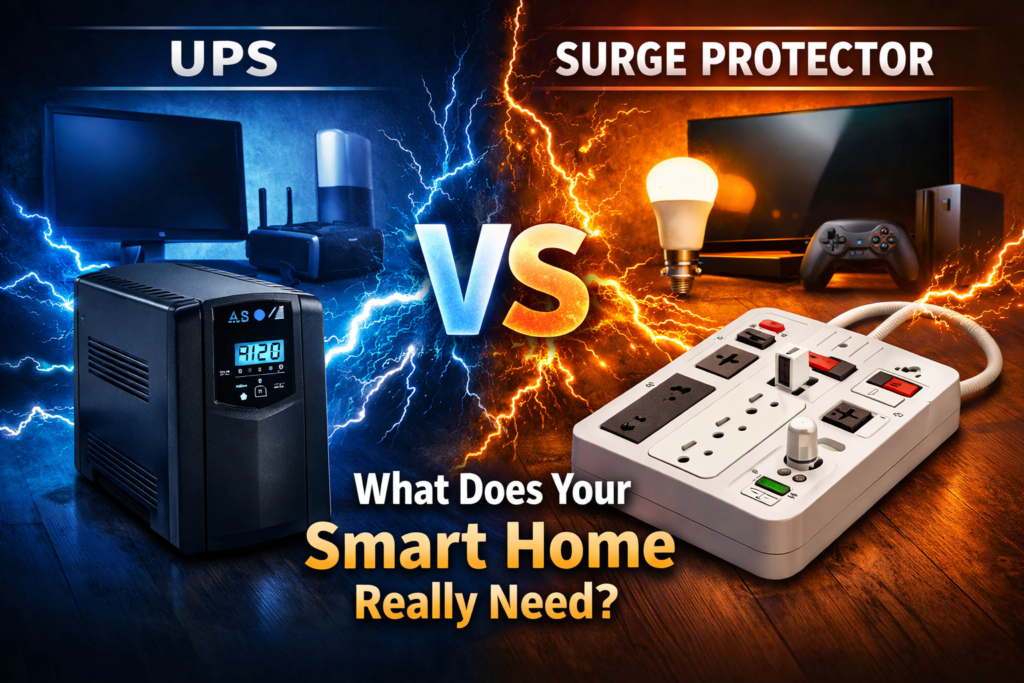
- Advanced surge protector power strips
- UPS systems with surge suppression
- Network and coax surge protectors
Ideal for:
- Smart TVs and streaming devices
- Routers, modems, and mesh Wi-Fi
- Computers, NAS systems, automation controllers
The Role of Grounding in Smart Home Surge Protection
Surge protectors do not eliminate energy — they redirect it to ground.
For effective protection, a smart home must have:
- Code-compliant grounding
- Low-impedance ground paths
- Proper bonding between systems
Poor grounding can render even the best surge protection ineffective.
Benefits of Layered Surge Protection in Smart Homes
Implementing a layered surge protection system provides:
- Longer lifespan for smart devices
- Fewer unexplained failures
- Improved network stability
- Protection for solar and EV investments
- Lower long-term replacement costs
For modern connected homes, surge protection is essential infrastructure.
Best Smart Home Surge Protection Products (Affiliate-Friendly)
These product categories integrate naturally into smart home setups and convert well for affiliate marketing.
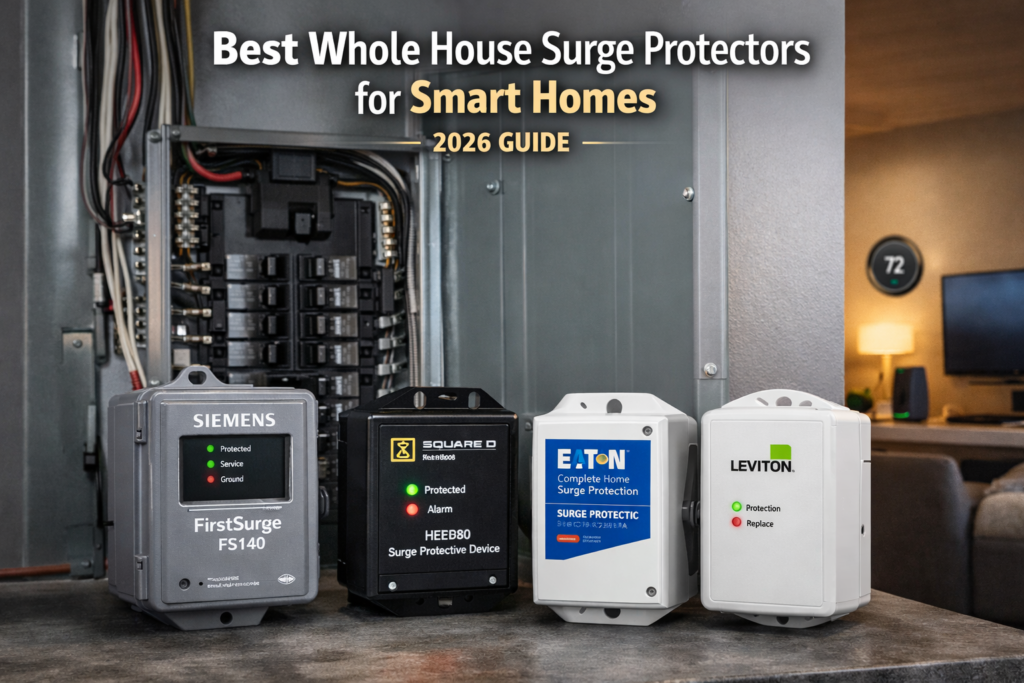
✔ Whole-House Surge Protectors
- Type 1 or Type 2 SPDs
- High surge current capacity
- Status indicators
✔ Subpanel Surge Protectors
- Compact, space-saving designs
- Ideal for home offices and media rooms
✔ Smart Surge Protector Power Strips
- High joule ratings
- EMI/RFI noise filtering
- Smart outlet control
✔ UPS Systems with Surge Protection
- Battery backup + clean power
- Ideal for networking and automation equipment
✔ Network & Coax Surge Protection
- Ethernet and coaxial surge suppressors
- Often overlooked but critical
FAQ – Smart Home Surge Protection
❓ Do smart homes really need whole-house surge protection?
Yes. Smart homes contain sensitive electronics that are easily damaged by voltage transients. Whole-house surge protection significantly reduces risk.
❓ Are plug-in surge protectors enough?
No. They are effective only as the final layer and should always be combined with a panel-mounted surge protector.
❓ Can lightning damage electronics without a direct strike?
Yes. Most damage comes from indirect lightning-induced surges traveling through utility lines.
❓ Is surge protection required for solar and EV systems?
Absolutely. Solar inverters, batteries, and EV chargers are highly sensitive to voltage disturbances.