
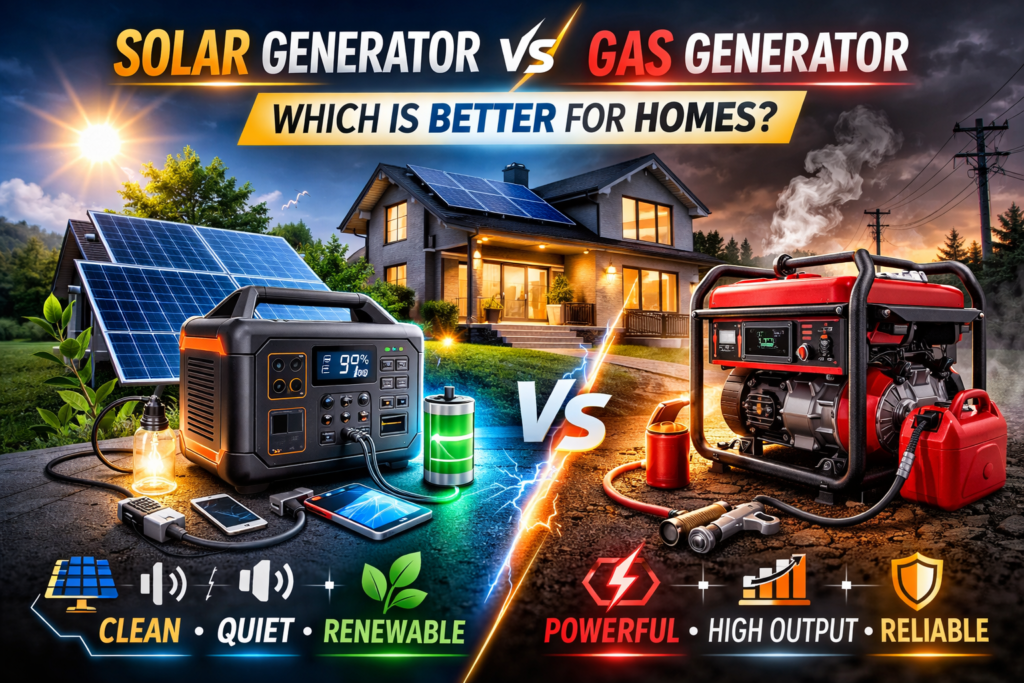
Backup power is no longer just an emergency tool — it’s becoming part of how modern homes stay connected. Between smart devices, remote work and home automation, losing electricity means losing stability.
Two solutions dominate the conversation today: solar generators and gas generators. Both keep your home running during outages, but they represent very different approaches to energy.
🔋 Solar Generators: Clean Power Built for Smart Homes
Solar generators store energy in lithium batteries and deliver it through pure sine wave inverters. Instead of producing electricity with fuel, they focus on clean, stable output — ideal for electronics.
They are especially useful for:
- Routers and home networking
- Smart home hubs
- Lighting systems
- Charging stations and portable devices
Brands like EcoFlow, Jackery and Bluetti have pushed this category closer to consumer tech, with app monitoring and fast charging features.
Pros
- Silent operation
- Indoor-safe (no fumes)
- Minimal maintenance
Cons
- Higher upfront cost
- Limited by battery capacity
⛽ Gas Generators: High Output When Power Demand Is Critical
Gas generators remain the reference point when heavy loads are involved. Their combustion engines deliver strong surge power, making them suitable for refrigerators, pumps or large appliances.
Models from Honda, Champion or Westinghouse now include inverter technology, offering cleaner power than older designs — though they still require outdoor use.
Pros
- High wattage output
- Long runtime with fuel
- Lower initial purchase price
Cons
- Noise and emissions
- Regular maintenance required
⚖️ Side-by-Side Comparison
| Feature | Solar Generator | Gas Generator |
|---|---|---|
| Noise Level | Almost silent | Loud during operation |
| Maintenance | Very low | Oil changes & servicing |
| Indoor Use | Yes | No |
| Power Capacity | Medium | High |
| Best For | Electronics & smart homes | Heavy appliances |
🧠 Real-World Use: Efficiency vs Raw Capacity
The real difference isn’t only technical — it’s philosophical.
Solar generators focus on daily resilience. They keep the digital core of your home alive: internet, cameras, automation and lighting.
Gas generators focus on maximum power under pressure. When outages stretch for days or heavy loads are unavoidable, they deliver the muscle solar systems may lack.
Many homeowners now combine both:
- Solar for silent everyday backup
- Gas for peak-demand emergencies
That hybrid strategy reflects how energy use at home is evolving.
🏡 Which Option Fits Your Home Best?
If your house relies heavily on connectivity and smart devices, a solar generator integrates naturally into that ecosystem. It feels modern, efficient and future-oriented.
If your priority is raw output and extended runtime at a lower cost, gas generators remain extremely practical.
The smartest choice isn’t about trends — it’s about how you want your home to function when the grid fails.
✅ Final Thoughts
Solar and gas generators solve the same problem from two different directions. One prioritises clean, stable energy; the other prioritises strength and endurance.
Understanding that difference helps you build a backup strategy that matches the way modern homes actually use electricity.
❓ Common Questions About Solar vs Gas Generators
1. Can a solar generator run an entire house?
Most portable solar generators are designed for essential loads like internet, lights, laptops and small appliances. Running a full home usually requires a large battery system combined with solar panels and proper load management.
2. Are gas generators cheaper than solar generators?
Gas generators normally have a lower upfront cost. However, over time you must consider fuel expenses, maintenance and noise. Solar generators cost more initially but have lower long-term operating costs.
3. Which generator is safer for indoor use?
Solar generators are safe indoors because they produce no fumes or carbon monoxide. Gas generators must always be used outside, away from windows and doors.
4. Do solar generators work at night or during cloudy days?
Yes. They store energy in batteries, so they continue working without sunlight until the battery is depleted. Solar panels simply recharge the system when sunlight is available.
5. Is a hybrid setup better than choosing only one type?
For many homes, yes. A solar generator can handle everyday backup quietly, while a gas generator provides extra power during long outages or heavy energy demand.