If you’ve ever grabbed whatever cord or strip was closest at hand to plug in a new smart speaker, router, or streaming box, you’re not alone, and you’re probably not as protected as you think. Extension cords, power strips, and surge protectors look almost identical from across the room, but they solve three different problems. Using the wrong one can mean a fire risk on one end of the spectrum and a fried smart hub on the other. Here’s what each one is actually built to do, and which one belongs in your setup.
The Core Difference: Three Tools, Three Jobs
An extension cord is just wire. It moves power from an outlet to a spot that doesn’t have one, and that’s it: no added outlets, no overload protection beyond what the wire’s gauge can physically carry, and no defense against voltage spikes. A power strip is an extension cord with multiple outlets, often with a simple resettable circuit breaker that trips if you draw more current than it’s rated for. That breaker guards against overload, not the fast voltage spikes from lightning, grid switching, or a compressor cycling on next door. A real surge protector adds internal components (usually metal oxide varistors, or MOVs) that absorb or redirect excess voltage before it reaches your gear. That’s a fundamentally different job, and it’s why a strip labeled “power strip” with no joule rating on it is doing none of it.
When an Extension Cord Makes Sense
- Short-term power for a single tool, vacuum, fan, or seasonal lighting setup, not a permanent installation. OSHA treats cord use beyond about 90 days as permanent wiring, which cords aren’t rated for.
- You need reach, not more outlets or protection.
- The gauge matches the load: 16 AWG cords suit light electronics under roughly 13 amps at typical lengths, while 12 and 14 AWG handle higher-draw tools and appliances.
- It’s never run under a rug or through a doorway as a permanent fix. Trapped cords build up heat and wear through insulation, a real fire cause, not just a code technicality.
What a cord should never power: a smart hub, router, NAS, TV, or anything you’d hate to lose to a spike. There’s no protection circuitry in a cord, full stop.
When a Basic Power Strip Makes Sense
- You need more outlets in one spot for low-stakes devices: a lamp, a phone charger, a printer, shop tools.
- The strip has its own breaker or fuse and isn’t plugged into another strip or cord to extend its reach. Most strips are rated for only four to six devices, and daisy-chaining them is an OSHA and NEC violation that shows up repeatedly in fire-hazard inspections.
- Nothing on it is a single-point-of-failure device; if the breaker trips or a spike gets through, the worst case is an inconvenience.
Check the packaging carefully. Many “power strips” sold next to surge protectors carry no joule rating, meaning they only interrupt current on overload and do nothing for the microsecond voltage spikes that damage electronics. If the box doesn’t list joules or UL 1449, assume it’s not surge protection.
Why Smart Home Electronics Need Real Surge Protection
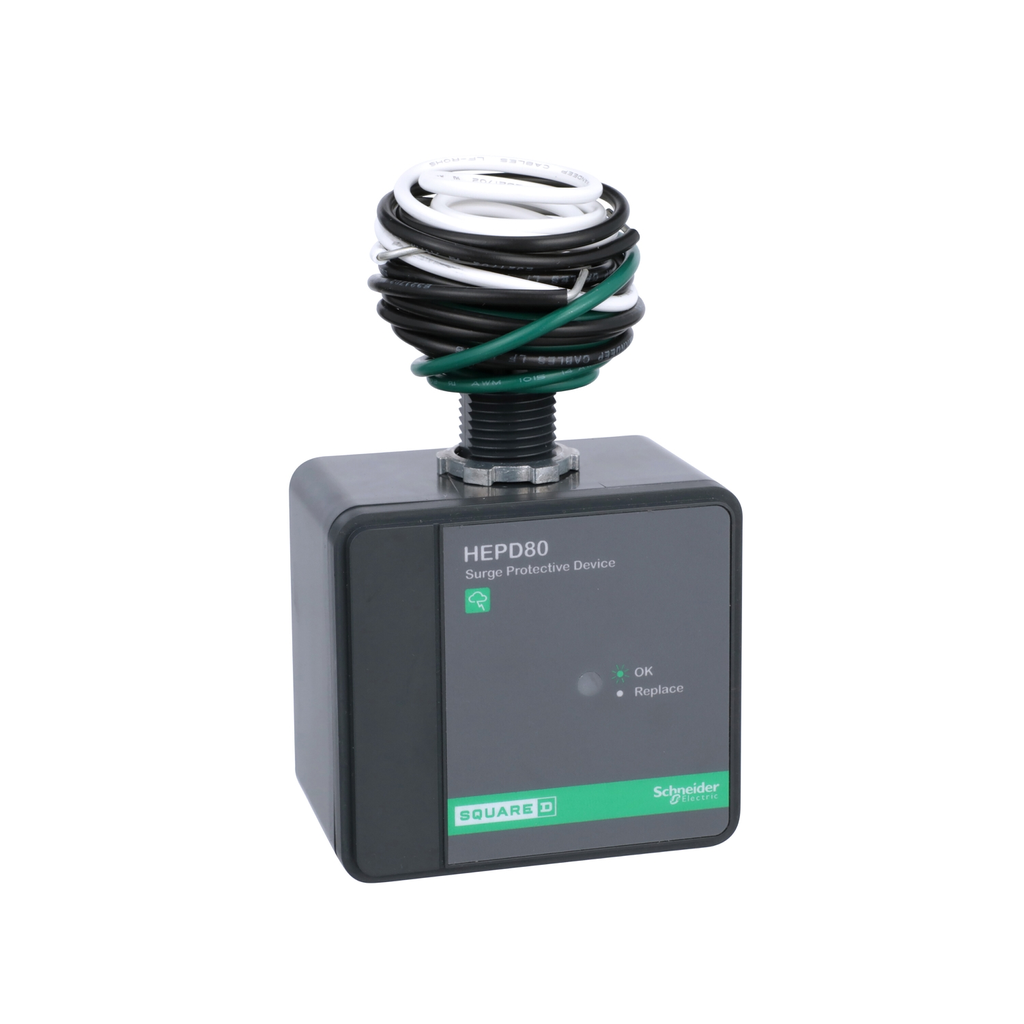
A true surge protector is rated in joules, a rough measure of how much surge energy it can absorb over its lifetime. Every clamped spike degrades the MOVs inside a little, and a large enough event can use up a low-joule unit in a single hit. Look for a joule rating in the low thousands for anything protecting multiple devices, and check the clamping voltage or Voltage Protection Rating (VPR), the maximum voltage the unit lets through during a standardized surge test; lower VPR means tighter protection. UL 1449 certification confirms the device was actually tested to this standard, not just labeled “surge protector.” This matters most for always-on smart home gear: hubs, routers, mesh Wi-Fi points, NAS drives, and streaming boxes sit plugged in around the clock, exposed to every spike on the circuit, not just the ones that happen while you’re using them.
Comparison: Real Products Across All Three Categories
| Product | Type | Outlets | Key Spec | Approx. Price |
|---|---|---|---|---|
| Amazon Basics 16 AWG Extension Cord, 20 ft | Extension cord | 1 | 13A / 125V, 16 AWG | ~$13 |
| GE 14830/14831 6-Outlet Power Strip | Power strip (no surge protection) | 6 | Circuit breaker only, no joule rating | ~$10 |
| Amazon Basics 6-Outlet Surge Protector | Surge protector | 6 | 790 joules | ~$15 |
| Anker PowerPort Strip PD 6 | Surge protector | 6 + 3 USB (1 USB-C PD) | 1,280 joules | ~$40 |
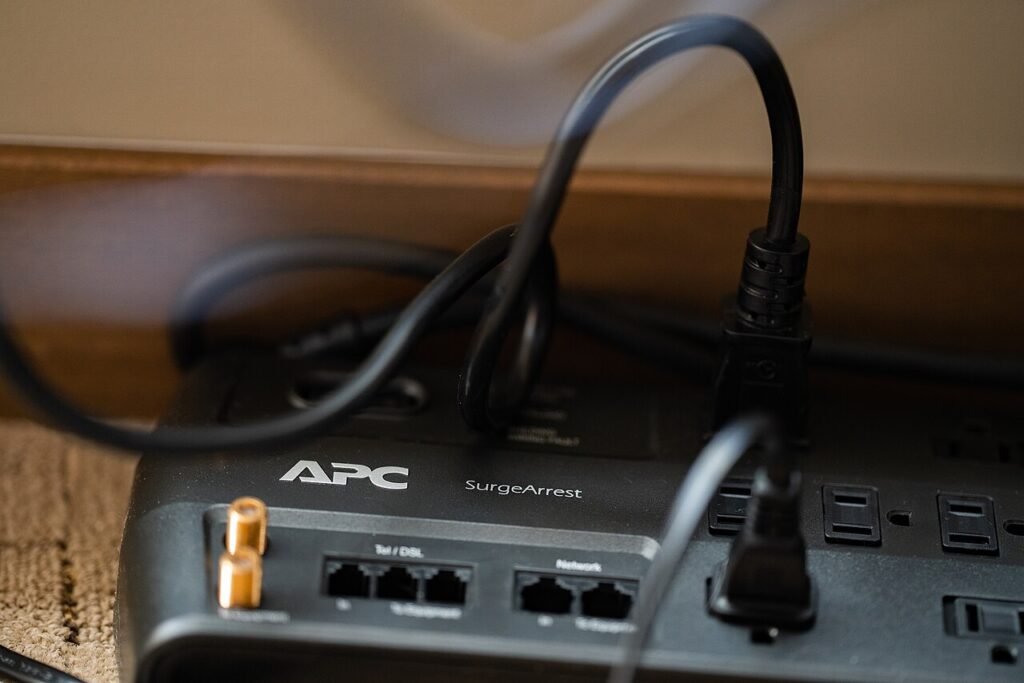
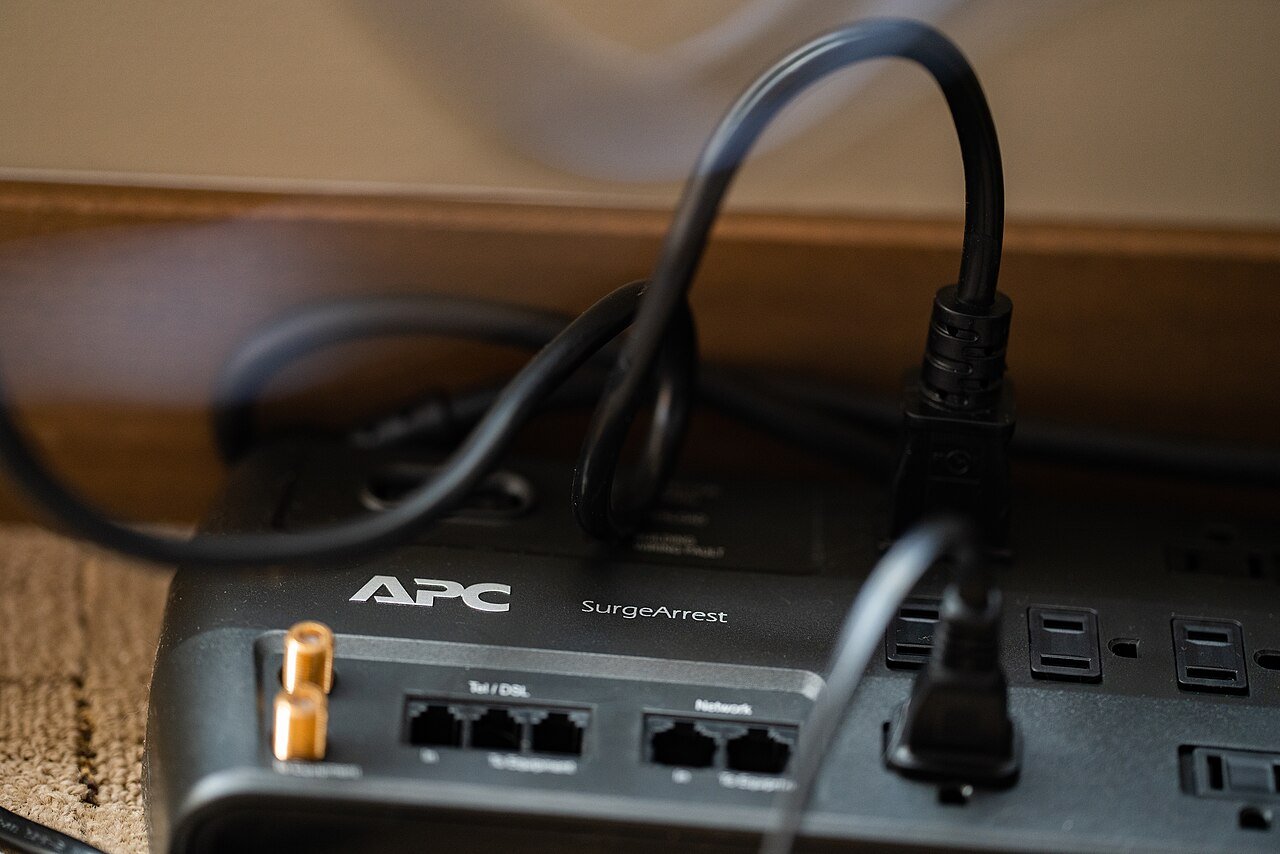
| APC P11U2 SurgeArrest | Surge protector | 11 + 2 USB | 2,880 joules | ~$48 |
| Tripp Lite TLP1008TEL Protect It! | Surge protector | 10 + tel/modem protection | 2,395 joules | ~$74 |
Prices and specifications change often — always confirm current pricing, joule rating, and outlet count on the retailer’s product page before buying.
Safety and Circuit-Overload Considerations
Most US homes run outlets on 15-amp circuits, with some kitchens, garages, and bathrooms on 20-amp circuits. As a rule of thumb, keep continuous load under about 80 percent of the circuit’s rating, or 12 amps on a standard 15-amp circuit. Add up the wattage plugged into one cord or strip and divide by 120 volts to check your draw before assuming it’s fine. Space heaters, window air conditioners, and other high-draw appliances belong on a wall outlet or a heavy-gauge cord rated for that load, never a basic power strip or light-duty cord. Never plug one power strip or surge protector into another to add outlets; it’s a recognized fire hazard and a code violation, not just bad practice. For a deeper look at how surge protection works and what to plug into it, see our guide to protecting smart devices from power surges.
Our Recommendation
Match the tool to the job instead of grabbing whatever’s closest. For a short-term, single-device need, an extension cord with the right gauge is fine. For extra outlets powering low-stakes gear like lamps or chargers, a basic power strip with its own breaker works, as long as you’re not chaining it to anything else. For your smart home hub, router, NAS, TV, or any always-on electronics, spend the extra few dollars on a UL 1449-certified surge protector with a joule rating in the low thousands; the APC and Tripp Lite units above are reasonable starting points. If you also want your network gear to stay online through short outages, not just protected from spikes, that’s a job for a battery backup, not a surge protector; our UPS vs. surge protector comparison covers that distinction. And if you’re protecting an entire home’s wiring from a major grid event or nearby lightning strike, a point-of-use strip isn’t enough; check our whole-house surge protector guide instead.
Frequently Asked Questions
Can I plug a surge protector into an extension cord?
Better not to. Plug surge protectors directly into a wall outlet whenever possible. If you truly have no other option, use a short, adequately rated cord, and never plug a second protective strip into the first one; that’s the daisy-chaining pattern that overloads circuits and voids most warranties.
Does a power strip protect against power surges?
Only if it’s built to. Look for a joule rating and UL 1449 certification on the packaging. A strip that only mentions a circuit breaker or overload protection guards against too much current draw, not the voltage spikes that damage electronics.
How do I know when to replace a surge protector?
Most models have an indicator light that goes out or changes color once the internal protection has degraded past usefulness, often after one large surge or many smaller ones. Even without an obvious event, replacing a heavily used unit every three to five years is a reasonable habit, since the components wear down with every spike whether you notice it or not.